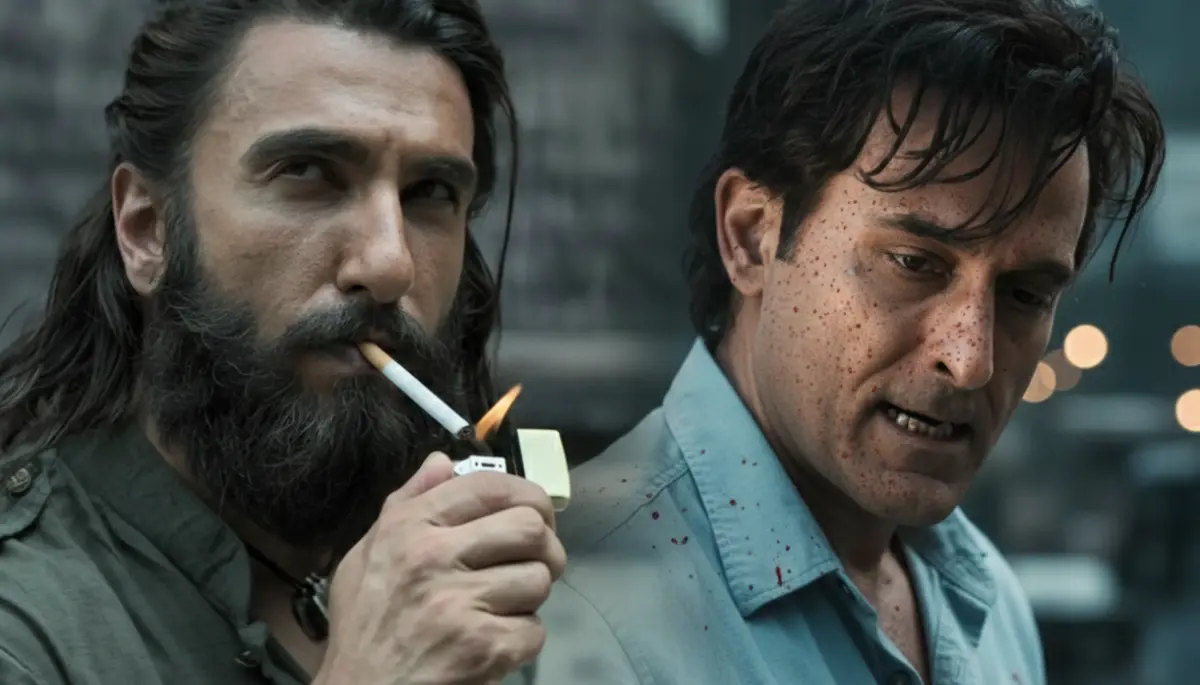
Bollywood film ‘Dhurandhar‘, starring Akshaye Khanna and Ranveer Singh, has created a new history at the box office in the country. Within just a week of its release, the film has become a member of the Rs 200 crore club at the Indian box office. Its overseas earnings have also reached Rs 44.5 crore. But in the midst of this triumph, the film’s path has been blocked in the international arena, especially in the Middle East, facing severe obstacles.
But why is it banned in the Middle East?
The film’s international journey has not been smooth. Bahrain, Kuwait, Oman, Qatar, Saudi Arabia and the United Arab Emirates—all six Gulf countries—have banned ‘Dhurandhar’ from their theaters. Local authorities say the film has an “anti-Pakistan message” that could disrupt regional harmony.
This is not an isolated incident. Indian films like ‘Fighter‘, ‘The Kashmir Files‘, ‘Article 370‘ have also been denied permission in the region in the past or have been banned later. This sets a clear precedent: Indian films with sensitive political stances on borders or neighbourhoods face intense scrutiny in the Middle East. Authorities take such steps because of potential diplomatic unrest or their sensitivity to local public opinion.
Hrithik Roshan’s ambivalent response: praise for art, criticism of politics
He praised the film’s “storytelling” and “cinematic qualities” on Instagram. He praises the filmmakers as an artist. But he also makes it clear, “I may disagree with the politics (of the film).” He also hints at the debate over the responsibility of filmmakers as “global citizens.”
Roshan’s comments point to a larger debate: How should a work of art be judged on its political message and its artistic merit? Can a viewer still enjoy the film even if they disagree with the message? Hrithik’s statement reflects that complexity.
So what is the debate about?
The debate over ‘Dhurandhar‘ is divided into several levels:
- Censorship vs. freedom of expression: What is acceptable in one country is forbidden in another—it raises questions about the legitimacy of censorship in the face of international media flow.
- Is cinema a political tool? Critics raise the moral question of whether films consistently convey nationalist or anti-neighborly messages.
- Commercial success vs. critical acceptance: The film is clearly a commercial success, but will its controversial message determine its lasting artistic value?
‘Dhurandhar‘ is not just a blockbuster, it is a mirror that holds up before us the complex relationship between contemporary Bollywood, consumer tastes, and global politics. It shows that the success of a film in today’s era lies not only in its box office performance, but also in the discussions and debates it generates. When art, politics, business and diplomacy come together in this way, ‘Dhurandhar‘ becomes an important chapter not just in the on-screen story, but also in the real story behind it. As long as this debate continues, ‘Dhurandhar’ will remain in the discussion – perhaps for its artistic merit, or for the political storm it created. Read more
2 thoughts on ““Dhurandhar”: Storm in India, banned in the Middle East – Why the controversy over the movie doesn’t stop?”