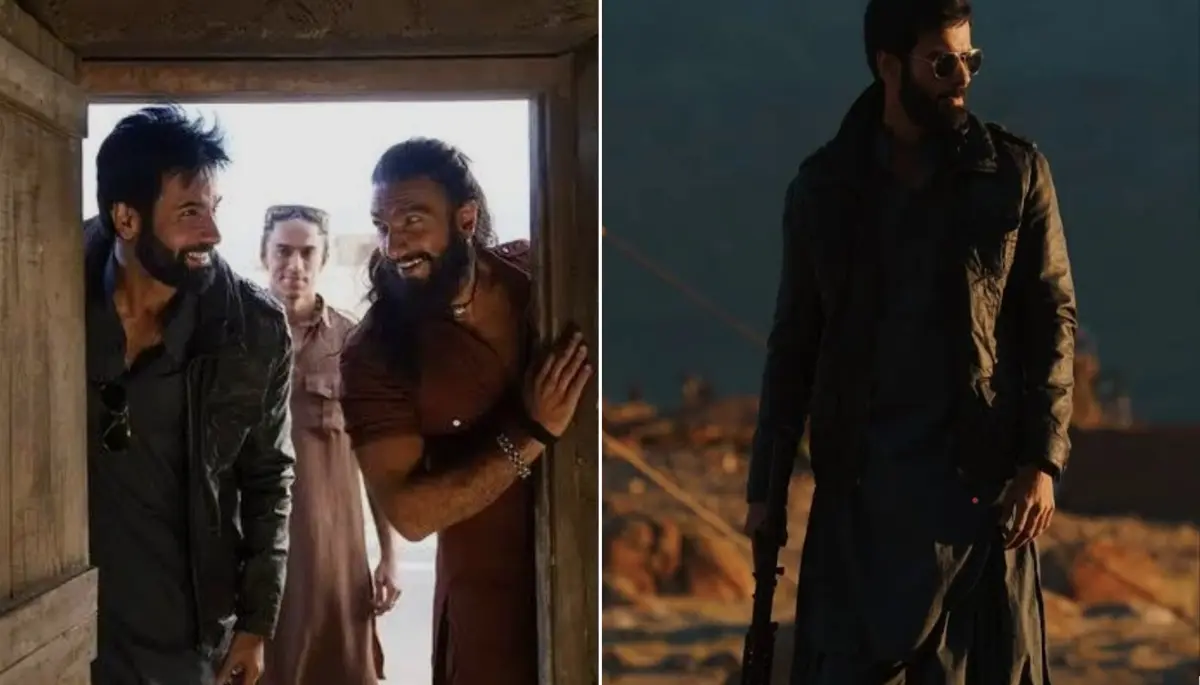
In Bollywood, whenever a movie is mentioned, there is a lot of buzz. Not only in terms of box office numbers, but also in terms of discussions and criticism, Ranveer Singh’s “Dhurandhar” is one of the films that has created a storm of discussion and criticism. Along with action, drama and the story of the gangster world, the film touches on a tragic and painful chapter of real life – the horrific Mumbai terrorist attacks of November 26, 2008 (26/11). Although the powerful and thrilling presentation of this scene and Ranveer’s performance impressed the audience, the story of an actor’s self-immolation behind the scenes was not heard. That story was told by Danish Pandor, who plays the role of Uzair Baloch in the film.
The joy and pain behind the scenes of “Uzer Baloch”
In the film “Dhurandhar“, Danish Pandor’s character is Uzer Baloch, the cousin of powerful Pakistani gangster Rehman Baloch. In the recreation of those horrific moments of the Mumbai attacks, he is seen in a state of joy and triumph. But the mental battle Danish had to go through on the shooting floor to portray this joy is revealed in his own description.
Danish describes that the scene shows the terrorists’ phone conversation with ISI officer Major Iqbal (a fictional character). After that, the film used the original audio recording of the 2008 attack. This recording not only captures the instructions and conversations of the terrorists, but also the screams, cries and cries of the trapped civilians. In Danish’s words, “That scene was really sad. I can’t imagine how much pain people had to go through that day… That scene was truly heartbreaking. I was very emotional.”
An Actor’s Conflict: Character vs. Person
This is where the fundamental conflict of a sensitive artist comes into play. Although he was celebrated on screen as a brutal, emotionless gangster, inside he was an Indian citizen, for whom the incident was a national tragedy. Danish clarifies, “Seeing this incident on the news is one thing. But hearing that conversation directly with your own ears is another. Listening to that recording, you can understand how horrific the incident was!”
However, professionalism was his only goal. So, he had to put aside his inner anger, pain and resentment and completely immerse himself in the character of “Uzer Baloch”. He says, “I feel bad. But my character has a different feeling!” This one sentence highlights the struggle for an actor to survive the character and the difficult responsibility of professionalism.
Silence of the audience: The greatest compliment to art
Danish shares another profound experience that bears strong testimony to the impact of this scene. He says that when this particular scene is shown in the theatre, the entire hall is plunged into a strange, profound silence. This silence is not the result of any instructions or planning; it is the genuine, uncontrollable emotional response of the audience. Such spontaneous expressions of respect, grief and silence in the face of that national tragedy prove how powerfully the work of art has penetrated the hearts of the audience.
26/11: The Unforgiven Wound of a Nation
This scene from “Dhurandhar” is not just a part of a movie, it is a reinterpretation of history that has remained indelible in the memories of a generation. From November 26 to 29, 2008, over 166 people were killed and over 300 injured in terrorist attacks on iconic places like the Taj Mahal Palace, Oberoi Hotel, Chhatrapati Shivaji Terminus and Nariman House in Mumbai. This incident is not just a statistic, it is an eternal warning to India and the world about the horrors of terrorism. The film, in between its entertainment, evokes discussion and thought among the audience by reminding them of this serious history.
Responsibility in Entertainment
The success of “Dhurandhar” is not just because of its fast-paced entertainment or star cast, but also because of its bold portrayal of historical truth. Danish Pondor’s experience reminds us of the emotional toll it takes on artists working on such sensitive subjects. It is not just a gangster drama, but a period documentary that honors our painful past while simultaneously making us aware of the present. Read more